

Signs of Joint Pain in Dogs: A 2026 Guide
Table of Contents
- Common Signs and Symptoms of Joint Pain in Dogs
- Behavioral Changes in Dogs with Arthritis
- Physical Limitations and Mobility Issues
- When to See a Vet for Dog Limping
- How to Manage Arthritis in Senior Dogs
- Breed-Specific Predispositions to Joint Disease
- Stages of Joint Disease and Early Detection
- Conclusion
Last Updated: August 30, 2026
Common Signs and Symptoms of Joint Pain in Dogs
Signs of joint pain in dogs often appear gradually, which is why many owners miss early warnings. What looks like normal aging might actually be your dog struggling with arthritis or degenerative joint disease. Learning to spot physical and behavioral shifts signals your dog's joints need attention.

Physical indicators to watch for
Swelling around joints is one of the most obvious signs. Run your hands along your dog's legs, knees, and hips regularly. If you notice thickening or warmth, that's inflammation at work. Some dogs develop visible crepitus, a grinding or popping sound when they move, indicating cartilage degradation.
Muscle loss around affected limbs is critical. When dogs favor one leg, muscles on that side atrophy from disuse. You might notice your dog's rear end looks uneven or one shoulder appears smaller. This muscular atrophy signals your dog has been compensating for pain.
Stiffness after rest is one of the most common complaints. Your senior dog might struggle to stand after napping or take first steps slowly in the morning. Post-rest stiffness often improves as your dog moves, but initial hesitation indicates a problem.
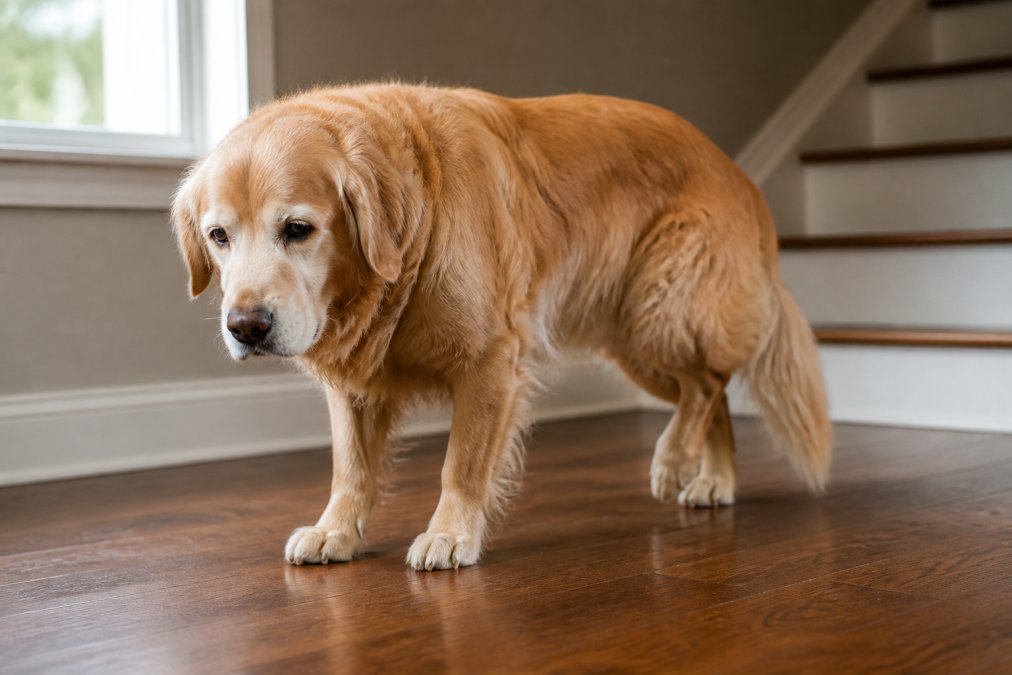
Lameness or limping is the sign people notice first. Your dog might favor one leg, carry a paw slightly off the ground, or shift weight away from the painful side. Some dogs develop a bunny-hopping gait in their rear legs, where both back legs move together rather than alternating. This gait change protects inflamed joints.
Gait changes and limping patterns
Watch how your dog moves at different speeds. Many dogs with early-stage joint issues move normally on flat ground but struggle with stairs, ramps, or uneven terrain. This signals compromised range of motion.
The way your dog gets up from lying down reveals much. A dog with healthy joints springs up easily. A dog with joint pain might rock forward several times before standing, push with front legs while dragging rear end up, or take seconds to fully extend legs. This difficulty rising is a hallmark of osteoarthritis.
Some dogs develop a stiff, shuffling walk where they don't lift legs as high. Others move with exaggerated care, placing weight deliberately on each leg. These compensatory patterns protect painful joints but strain other body parts over time.
Behavioral Changes in Dogs with Arthritis
Joint pain changes behavior far beyond limping. Your dog's personality and daily habits shift noticeably as arthritis progresses.

Dogs with joint inflammation often become less tolerant of handling. They might snap or growl when you touch a sore area, or simply move away when you pet them. This irritability is pain communication, not aggression. Some dogs become withdrawn, spending more time alone or showing less interest in family activities.
Exercise intolerance is a major shift. Your dog might refuse walks they loved, lag behind on familiar routes, or turn back early. Some stop playing, jump less, or avoid furniture they climbed on. A dog that greeted you enthusiastically might stay on their bed instead.
Sleep patterns often change. Dogs with chronic pain might sleep more during the day but struggle at night. You might notice them getting up and down frequently, repositioning constantly, or panting quietly. Some develop behavioral anxiety around movement, hesitating before jumping or showing reluctance to go outside.
Many owners notice senior dogs become less social. A dog that played with others or sought attention might prefer isolation. When movement hurts, dogs naturally avoid situations triggering that pain.
Physical Limitations and Mobility Issues
Mobility issues are the most visible consequence of joint disease. Your dog's ability to navigate their environment changes significantly as arthritis progresses.
Difficulty with stairs becomes obvious early. Your dog might climb slowly, one step at a time, or avoid them entirely. Going down is often harder than going up because it requires more control and stresses painful joints. Some dogs refuse to go upstairs or downstairs.
Jumping onto furniture becomes impossible or painful. Your dog might try but fail to make it, or land heavily and yelp. Many simply stop trying, losing independence.
Getting in and out of a car becomes challenging. Your dog might need a boost or refuse entirely because the jump is too painful. Some cry out when jumping down, indicating significant joint stress.
Slipping on hard floors is another mobility issue. Dogs with weak rear legs struggle on tile, wood, or laminate. They might splay legs, slide, or refuse certain surfaces. This is a legitimate mobility problem, not laziness.
When to See a Vet for Dog Limping
Not every limp requires emergency care, but persistent lameness always deserves veterinary attention.
A limp lasting less than 24 hours might resolve on its own. But if your dog limps after a day or two, it's time for a vet visit. A limp that comes and goes over weeks also warrants investigation.
See a vet immediately if your dog can't put weight on a limb, if there's obvious swelling or heat in a joint, if your dog is in visible pain, or if the limp appeared suddenly after a fall or injury.
Your vet will perform a physical examination, checking range of motion, palpating joints for heat and swelling, and observing gait. They'll ask when the limp started, whether it's worsening, and what makes it better or worse.
Radiographs (X-rays) are the standard diagnostic tool for joint disease. They show cartilage loss, bone changes, and arthritis severity. Some vets use ultrasound or MRI for complex cases, but X-rays give a clear picture of what's happening inside the joint.
A veterinary diagnosis is essential because limping can indicate arthritis, injuries, infections, nerve damage, or other conditions. Only a vet can determine the actual cause and recommend appropriate treatment.
How to Manage Arthritis in Senior Dogs
Managing arthritis involves a multi-pronged approach. You can't cure degenerative joint disease, but you can slow progression and significantly improve quality of life.
Anti-inflammatory medications are often first-line treatment. NSAIDs (non-steroidal anti-inflammatory drugs) reduce inflammation and pain, allowing comfortable movement (the NIH). Your vet will recommend specific medications and dosages based on your dog's age, weight, and health. Regular monitoring ensures these medications aren't affecting your dog's organs.
Joint supplements containing glucosamine, chondroitin, and omega-3 fatty acids support joint lubrication and may slow cartilage degradation. Many owners report noticeable improvement when started early. Fish oil supplements have strong evidence for supporting joint health and reducing inflammation (peer-reviewed research).
Weight management is critical. Extra pounds stress already-compromised joints. If your senior dog is overweight, achieving a healthy weight dramatically reduces pain and improves mobility. Even 5-10% weight loss makes a measurable difference (the NIH).
Physical therapy and gentle exercise keep joints mobile and muscles strong. Short, frequent walks on soft surfaces are better than long hikes. Swimming and hydrotherapy are excellent low-impact options maintaining fitness without stressing joints. Your vet might refer you to a canine physical therapist.
Creating a supportive home environment
Your home environment plays a huge role in managing arthritis. Small modifications make movement easier and reduce pain.
Ramps and steps help your dog access favorite spots without jumping. Non-slip surfaces reduce slipping and give better traction. Yoga mats, rugs, or non-slip flooring in high-traffic areas make a real difference.
Raised food and water bowls reduce strain on your dog's neck and front legs. Elevated bowls improve comfort and digestion.
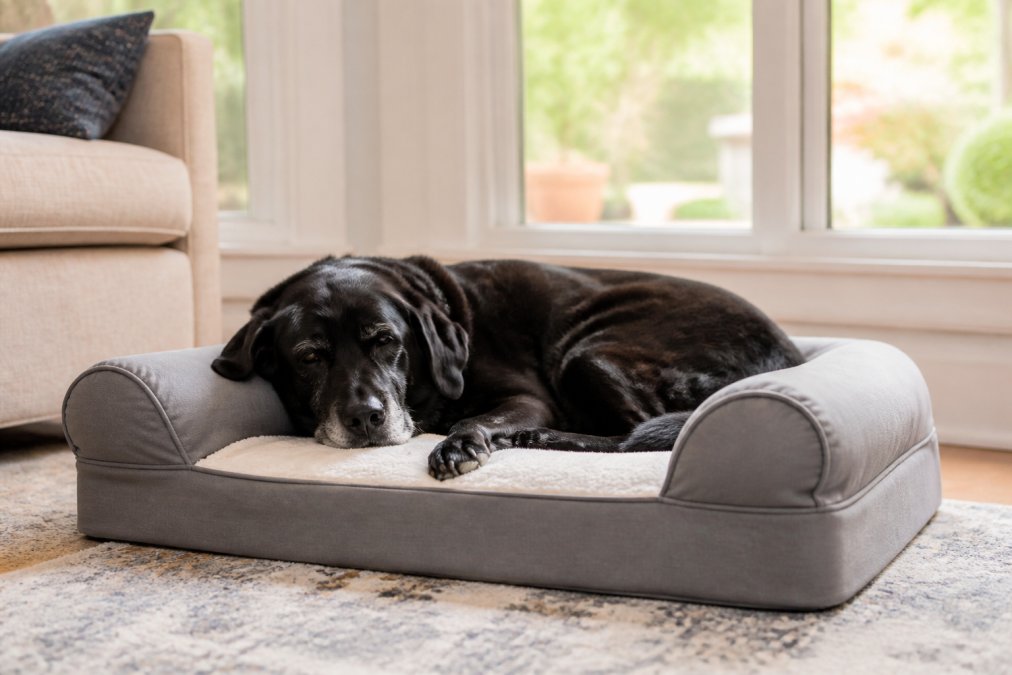
Orthopedic bedding is one of the most important investments. A quality orthopedic dog bed with memory foam provides support and distributes weight evenly, reducing pressure on sore joints. At NovelPet Store, the Barker Beds XL Orthopedic Dog Bed - 7" Pillow Top with Headrest - 75-120 Lbs - Memory Foam for Joint Pain & Arthritis - Vet Recommended, Washable Cover - Made in USA - 52"X36"X7" - Chocolate features a 7-inch memory foam mattress for large dogs weighing 75-120 pounds. The washable cover helps with incontinence issues, and the elevated design with headrest provides neck support. For giant breed dogs, the Barker Beds Giant Orthopedic Dog Bed - 7" Memory Foam Mattress - 100-300 Lbs - Joint Pain & Arthritis Support - Vet Recommended, Washable Cover - Made in USA - 60"X48"X7" - Burgundy accommodates dogs up to 300 pounds with the same therapeutic support.
The role of orthopedic support and best orthopedic dog beds for arthritis
Best orthopedic dog beds for arthritis provide therapeutic benefits beyond comfort. A proper orthopedic bed reduces pressure points, supports spine alignment, and makes sleeping easier for arthritic dogs.
Memory foam is the gold standard. It contours to your dog's body, distributing weight evenly and reducing joint stress. Gel-infused memory foam stays cooler. The foam should be at least 4-6 inches thick, though 7 inches is better for large dogs.
Raised orthopedic beds keep your dog off cold floors and make getting up easier. Elevation reduces the distance your dog must stand, helpful for dogs with weak rear legs. Some dogs appreciate air circulation under elevated beds.
Waterproof liners protect foam from damage while keeping the bed comfortable. The cover should be removable and washable for easy cleaning.
Size matters significantly. Your dog should stretch out fully and turn around comfortably. Measure your dog when stretched out and add a few inches for comfort.
Breed-Specific Predispositions to Joint Disease
Certain breeds are genetically predisposed to joint problems. Understanding your dog's breed risk helps catch problems early.
Large and giant breed dogs are at highest risk. German Shepherds, Labrador Retrievers, Golden Retrievers, Rottweilers, and Great Danes develop arthritis earlier and more severely than small breeds. Their size stresses joints, and many carry genes for hip dysplasia and elbow dysplasia, accelerating joint disease.
Small breeds aren't immune. Dachshunds, Chihuahuas, and toy breeds often develop joint problems due to body structure. Dachshunds are particularly prone to intervertebral disc disease affecting the spine.
Working and sporting breeds like Border Collies, Australian Shepherds, and hunting dogs often develop joint issues from repetitive impact and high activity levels. Their athletic nature masks pain until significant damage occurs.
Mixed breed dogs inherit predispositions from parent breeds. Watch for early signs and discuss breed-typical risks with your vet.
Age of onset varies by breed and genetics. Some dogs show signs at five years old, while others remain comfortable into their early teens. Knowing your breed's typical timeline helps you watch for early warning signs.
Stages of Joint Disease and Early Detection
Joint disease progresses through stages, and early detection makes a huge difference in outcomes.
Stage 1 (Early/Subclinical): Changes happen at the cellular level, but your dog shows no obvious signs. Cartilage begins degrading, but your dog moves normally. This stage is hard to detect without imaging, but preventive measures help most. If your dog is a high-risk breed, discuss early joint support with your vet.
Stage 2 (Mild): Your dog shows occasional stiffness after rest or exercise. Lameness might appear and disappear. Your dog might be reluctant to jump or climb stairs. X-rays show early cartilage loss and bone changes. This is the critical window for intervention. Anti-inflammatory medications, supplements, weight management, and environmental modifications slow progression significantly.
Stage 3 (Moderate): Lameness is consistent. Your dog shows obvious difficulty with stairs, jumping, and rising. Muscle atrophy is visible. Pain is present most days. X-rays show significant cartilage loss and bone remodeling. Management focuses on pain control and maintaining quality of life.
Stage 4 (Severe): Your dog has severe lameness or inability to use a limb. Movement is significantly limited. Pain is constant. Muscle loss is severe. Quality of life is compromised. Management becomes palliative, focusing on comfort.
Early detection is the game-changer. A dog diagnosed and managed in Stage 2 will have years of comfortable mobility. A dog diagnosed in Stage 4 has limited options. Regular vet checkups for senior dogs catch early signs before they become severe. Discuss any behavioral or movement changes with your vet. Ask about joint health screening for high-risk breeds, even before signs appear. Preventive care, weight management, appropriate exercise, and joint supplements make the biggest difference.
Joint pain in senior dogs is manageable when caught early and addressed comprehensively. Regular veterinary care, environmental modifications, and appropriate orthopedic support transform your dog's comfort and quality of life. At NovelPet Store, we understand that your senior dog deserves premium care designed specifically for their needs. Our vet-recommended orthopedic dog beds with memory foam, combined with Made in USA quality, provide the therapeutic support arthritic dogs need to rest comfortably and move with less pain. Get started with NovelPet Store's orthopedic solutions and give your aging companion the comfort and support they truly deserve.
Frequently Asked Questions
Q: What are the earliest signs of joint pain in dogs?
A: The earliest signs of joint pain include reluctance to move, stiffness after rest, and difficulty rising from a lying position. You may notice your dog favoring one limb, moving more slowly, or showing post-rest stiffness similar to what humans experience. Some dogs exhibit behavioral changes like irritability or reduced interest in play before obvious physical signs appear. Early detection allows you to start management strategies sooner, which can significantly slow disease progression.
Q: How do I know if my dog has arthritis versus another joint condition?
A: Only a veterinary examination and diagnostic imaging like radiographs can confirm arthritis. However, osteoarthritis typically presents as progressive stiffness, lameness that worsens with exercise or cold weather, and swelling in affected joints. Your vet will perform a physical examination to assess range of motion, check for crepitus (grinding sounds), and identify muscular atrophy. Blood tests may rule out other conditions. If you notice persistent limping or mobility issues, schedule a veterinary appointment for proper diagnosis.
Q: What's the best way to manage arthritis in senior dogs at home?
A: Effective home management combines several strategies: maintain healthy weight to reduce joint stress, provide orthopedic support through quality dog beds with memory foam, modify your home environment to reduce stairs and jumping, and ensure regular gentle exercise. An orthopedic dog bed like the [Barker Beds XL Orthopedic Dog Bed - 7" Pillow Top with Headrest - 75-120 Lbs - Memory Foam for Joint Pain & Arthritis - Vet Recommended, Washable Cover - Made in USA - 52"X36"X7" - Charcoal](https://novelpet.store/products/barker-beds-xl-orthopedic-dog-bed-7-pillow-top-with-headrest-75-120-lbs-memory-foam-for-joint-pain-arthritis-vet-recommended-washable-cover-made-in-usa-52x36x7-charcoal) with 7-inch memory foam (€312.85) provides therapeutic support that reduces pain and improves mobility. Add ramps or steps to furniture, use non-slip rugs, and keep food and water bowls at comfortable heights to minimize bending.
Q: When should I take my dog to the vet for limping or joint pain?
A: Contact your veterinarian if your dog shows persistent limping lasting more than a few days, sudden inability to bear weight on a limb, visible swelling, reluctance to move or play, or behavioral changes like irritability. Don't wait if your dog shows signs of severe pain or cannot rise without difficulty. Early veterinary intervention for joint issues can prevent further cartilage degradation and improve your dog's quality of life through appropriate pain management and treatment options.
This article was written using GrandRanker