

How to Measure Your Dog for a Bed: A 2026 Guide
Table of Contents
- Why Measuring Your Dog Correctly Matters
- How to Measure Dog Length for Bed
- Adding the Buffer Space: The Essential Rule
- Dog Bed Size Chart by Breed
- Understanding Sleeping Positions and Bed Dimensions
- Orthopedic Dog Bed Sizing for Joint Support
- Choosing Bed Shape and Material for Your Dog's Needs
- Floor Space and Bed Placement Considerations
Why Measuring Your Dog Correctly Matters
Getting the right bed size starts with accurate measurement. A bed that's too small forces your dog into an uncomfortable curl when they'd rather stretch. A bed that's too large wastes floor space and fails to provide the snug fit that makes dogs feel secure. Senior dogs with arthritis benefit most from precision sizing because an undersized bed forces them into painful positions, while an oversized one lacks the bolstered support they need.
This guide walks you through the exact measurement process so you can choose a bed that your dog will actually love.
How to Measure Dog Length for Bed
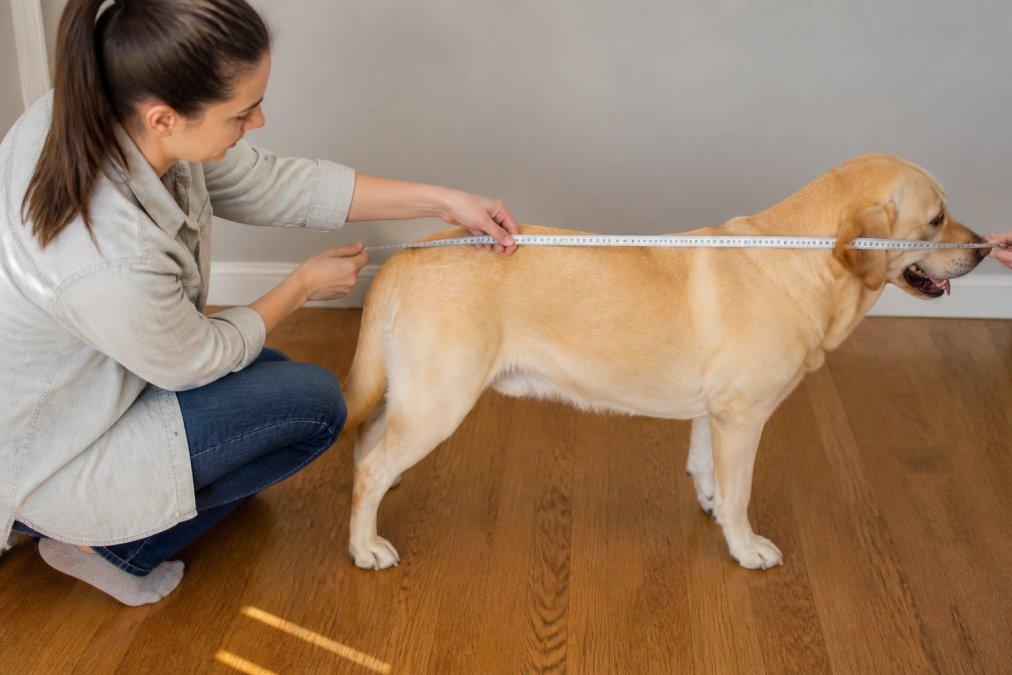
Measuring your dog requires two key measurements: length and height. Length determines whether your dog can stretch out comfortably, while height ensures the bed accommodates their natural sleeping posture.
Measuring from Tip of Nose to Base of Tail
Have your dog stand naturally on a flat surface. Using a fabric tape measure, measure from the tip of your dog's nose straight back to the base of their tail. Don't include the tail itself, just the base where it connects to the body. Keep the tape measure straight and level, angling it upward or downward adds inches that don't reflect actual resting length. If your dog won't stand still, measure them while they're lying down in their natural stretched position.
Write down this measurement in inches. This is your baseline length, the absolute minimum bed dimension your dog needs to stretch out fully.
Recording Your Dog's Height
Measure from the floor straight up to the highest point of your dog's shoulder when standing normally, not their head. This measurement matters less for bed length but becomes critical when choosing bed depth and bolstered designs. A taller dog needs a bed with adequate cushion thickness so they don't bottom out on a thin mattress.
Adding the Buffer Space: The Essential Rule
Here's the mistake most dog owners make: they buy a bed that exactly matches their dog's length. Then their dog tries to stretch out and their rear end hangs off the edge.
Add at least 4-6 inches to your dog's length measurement. This gives them room to stretch fully without touching the bed's edge, which matters psychologically, dogs feel more secure with breathing room. For senior dogs with arthritis, this extra space prevents them from compensating for stiffness by curling up more than necessary.
For very large dogs or those prone to sprawling, add 8 inches instead. A 70-pound dog that stretches out fully might need 50+ inches of bed length to feel comfortable. This isn't wasted space; it's the difference between a bed your dog uses constantly and one they avoid because it feels cramped.
Dog Bed Size Chart by Breed
| Breed Category | Typical Weight | Recommended Length | Recommended Width | Best Bed Type |
|---|---|---|---|---|
| Small (Chihuahua, Yorkshire Terrier) | 2-10 lbs | 24-30 inches | 18-24 inches | Cushioned nest or round |
| Small-Medium (Beagle, Cocker Spaniel) | 10-25 lbs | 30-36 inches | 24-30 inches | Rectangular or bolstered |
| Medium (Labrador, Golden Retriever) | 25-55 lbs | 36-42 inches | 30-36 inches | Rectangular or orthopedic |
| Large (German Shepherd, Great Dane) | 55-100 lbs | 42-50 inches | 36-42 inches | Large orthopedic or bolstered |
| Giant (St. Bernard, Mastiff) | 100+ lbs | 50-60 inches | 42-48 inches | Extra-large orthopedic with memory foam |
Use this chart as a reference point, but always prioritize your actual measurement over breed recommendations. Individual dogs vary significantly, some Labs are lean at 50 pounds while others are stocky at 85 pounds. For dogs with orthopedic needs, size up rather than down. A slightly larger bed prevents the need to replace an undersized bed when your dog's comfort requirements change.
Understanding Sleeping Positions and Bed Dimensions
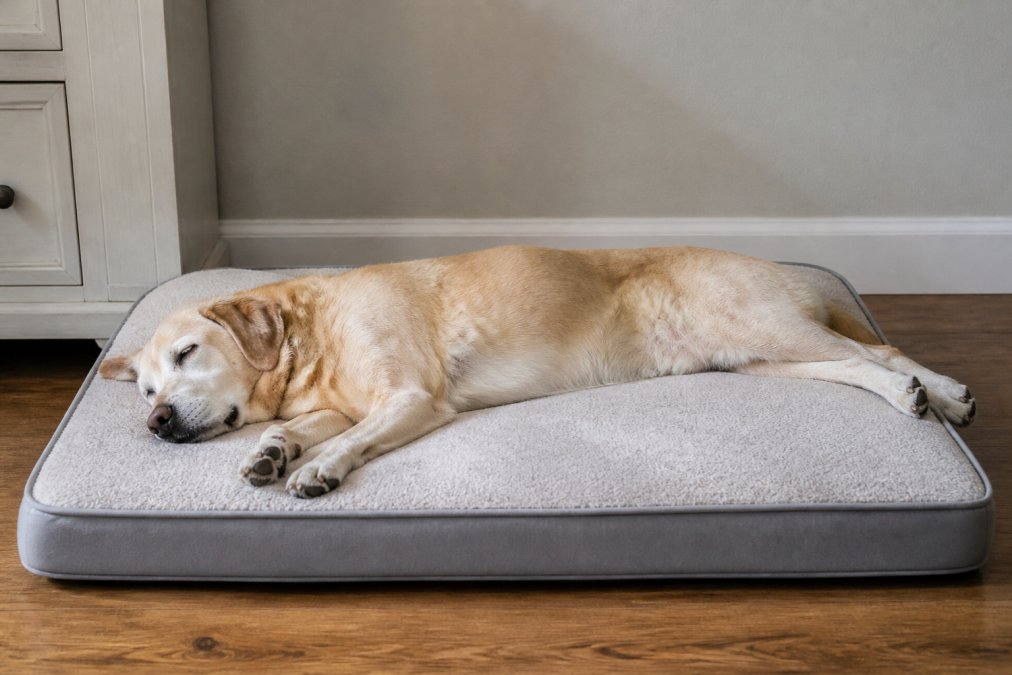
Your dog's preferred sleeping position directly influences what bed dimensions will actually work.
Side Sleepers and Sprawlers
Side sleepers stretch out fully when resting, extending their front and back legs. They need maximum length in their bed, at least their nose-to-tail measurement plus 6-8 inches of buffer. Width matters less for sprawlers, but adequate width prevents them from rolling off the side. A dog stretched out on their side needs about 12-18 inches of width depending on their body size.
Sprawlers benefit most from rectangular beds because the long, straight shape matches their natural position. Round beds force them to contort, which defeats the purpose of providing comfort.
Curled-Up Sleepers and Nesting Preferences
Some dogs prefer to curl up into a ball when sleeping. They need adequate bed dimensions to achieve this position without their nose touching their rear end uncomfortably. A curled dog needs a bed length equal to their nose-to-tail measurement plus just 2-3 inches of buffer.
Round or square beds work beautifully for curled sleepers because the shape naturally supports the nesting instinct. Bolstered beds, those with raised edges on some or all sides, are especially popular with dogs that like to curl because the bolster provides the "surrounded" feeling they crave.
Watch how your dog naturally sleeps at home right now, then choose dimensions and shape that match that actual behavior.
Orthopedic Dog Bed Sizing for Joint Support
Orthopedic beds require different sizing logic than standard beds because thickness and support matter as much as dimensions. An orthopedic bed that's the right length but too firm won't provide the joint relief your dog needs.
For dogs with arthritis or joint pain, the ideal orthopedic bed combines adequate length with significant cushion depth. Most quality orthopedic beds feature 4-7 inches of memory foam, which provides pressure relief by distributing your dog's weight evenly (peer-reviewed research). A shallow orthopedic bed, anything under 4 inches, fails to deliver the support that makes these beds worth the investment (aaha.org).
Size your orthopedic bed using the same length and width measurements as a standard bed, but prioritize weight capacity. An 85-pound dog with arthritis needs an orthopedic bed rated for at least 100+ pounds. The NovelPet Store Barker Beds XL Orthopedic Dog Bed, for example, is specifically designed for dogs weighing 75-120 pounds and features 7-inch memory foam that maintains its shape without flattening over time.

Senior dogs benefit from orthopedic beds because the memory foam conforms to their body, reducing pressure on arthritic joints (peer-reviewed research). For dogs with significant joint issues, an orthopedic bed isn't a luxury, it's therapeutic.
Choosing Bed Shape and Material for Your Dog's Needs
Bed shape and material determine not just comfort but durability and maintenance.
Rectangular vs. Round Beds
Rectangular beds suit sprawlers and larger dogs because they provide maximum usable length. Round beds appeal to curled sleepers and smaller dogs because the shape encourages nesting. For most dogs, rectangular beds are the safer default choice because they accommodate multiple sleeping positions better than round beds.
Bolstered Beds and Cushion Density
Bolstered beds feature raised edges on one or more sides. These edges provide a headrest, create the nesting sensation, and help contain your dog in the bed's center. Dogs that like to rest their head on something find bolstered beds significantly more comfortable than flat designs.
Cushion density determines how long the bed maintains its support. High-density memory foam maintains its shape for years, while low-density foam compresses quickly. For a dog that will use the bed 12+ hours daily, investing in higher density pays off through longevity.
A bed with a removable, machine-washable cover is infinitely more practical than one requiring spot-cleaning. The NovelPet Store Rectangle Large Dog Bed features a completely removable, washable cover with a non-slip base. For dogs prone to accidents or outdoor mud, washability should outweigh the appeal of premium-feeling materials.

Floor Space and Bed Placement Considerations
Before buying any bed, measure the floor space where you plan to place it. High-traffic areas create stress for dogs trying to rest. A bed placed in a quieter corner or alcove where they can rest without being stepped over is ideal.
A bed that fills an entire corner might look visually overwhelming. Aim for at least 6-12 inches of clearance on all sides, which gives the bed breathing room and makes the space feel intentional. Consider your dog's access to water and outdoor areas, a bed near a window lets your dog rest while watching outside, which many dogs find enriching.
For dogs with mobility issues or arthritis, place the bed on a non-slip surface. A bed sliding across hardwood floors frustrates dogs trying to step into it. A rug or non-slip mat under the bed provides stability and makes it easier for your dog to settle in without the bed shifting under their weight.
Getting the right bed size comes down to honest measurement and understanding how your dog actually sleeps. NovelPet Store's orthopedic dog beds with memory foam are designed specifically for senior dogs and those with joint pain, and they come in sizes matched to precise measurements rather than generic categories. Our vet-recommended beds feature washable covers, non-slip bases, and memory foam that maintains its support for years. Measure your dog today, and give them the comfort they genuinely deserve.
=== FAQ ANSWERS (audit these too, same rules) ===
Frequently Asked Questions
Q: What size bed does a 70 lb dog need?
A: A 70 lb dog typically needs a bed measuring at least 50 inches long and 36 inches wide to accommodate full-body stretching. Add 12 inches to your dog's length measurement (tip of nose to base of tail) and multiply by 1.2 to account for sleeping position and growth buffer. For orthopedic support, look for beds with memory foam that distribute weight evenly and reduce pressure points on joints, especially important for senior dogs with arthritis.
Q: How much bigger should a dog bed be than the dog?
A: Your dog's bed should be 12 to 18 inches longer than their full body length when stretched out. This buffer space allows your dog to sprawl comfortably without their paws hanging over the edge. For side sleepers and belly sleepers, the extra clearance prevents discomfort. Beds with bolstered edges provide additional security for dogs that prefer nesting, while still offering enough room for natural sleeping positions.
Q: How do I measure my dog's weight to determine the right orthopedic dog bed sizing?
A: Weigh your dog at your veterinarian's office for accuracy. Most orthopedic dog beds specify weight capacity ranges (e.g., 75-120 lbs, 100-300 lbs). Choose a bed rated for your dog's current weight plus 10-15 lbs to account for future growth or weight fluctuations. Proper weight distribution in memory foam beds is critical for joint pain relief and arthritis support, so matching your dog's weight to the bed's weight capacity ensures adequate cushion density and long-term durability.
Q: Can I use a regular dog bed for a senior dog with arthritis?
A: Regular beds lack the support senior dogs with arthritis need. Orthopedic dog beds with memory foam provide joint pain relief and improve mobility by distributing weight evenly and reducing pressure points. A vet-recommended orthopedic bed with at least 5-7 inches of foam thickness and a non-slip base supports proper spinal alignment and makes it easier for arthritic dogs to stand up and lie down. This investment directly improves your senior dog's quality of life.
This article was written using GrandRanker