

How to Keep Dog Beds Clean: 7 Steps
Table of Contents
- Why Keeping Dog Beds Clean Matters for Your Pet's Health
- How Often to Wash Dog Beds
- Step-by-Step Guide to Washing Machine-Washable Dog Beds
- How to Get Dog Smell Out of Bed
- Cleaning Non-Washable Dog Beds
- Spot Cleaning and Maintaining Between Full Washes
- Common Mistakes to Avoid When Cleaning Dog Beds
- Conclusion
Last Updated: August 14, 2026
Why Keeping Dog Beds Clean Matters for Your Pet's Health
A clean dog bed is far more than a comfort issue, it's a health necessity. Pet owners who prioritize bed hygiene report fewer incidents of skin infections, reduced odor problems, and happier dogs overall. At NovelPet Store, we understand that senior dogs and those with arthritis spend considerable time resting on their beds, making cleanliness even more critical for their wellbeing.
When dog beds accumulate dirt, dander, bacteria, and allergens, they become breeding grounds for parasites and fungal growth. Dogs with joint pain or mobility issues spend extended periods on their beds, which means prolonged exposure to whatever contaminants have built up. For pets suffering from arthritis or other chronic conditions, a contaminated sleeping surface can actually worsen skin irritation and increase inflammation.
Beyond health, regular cleaning extends the life of your dog's bed significantly. Memory foam and orthopedic support materials deteriorate faster when exposed to moisture, bacteria, and mold. A bed that's properly maintained will provide reliable support for years, while a neglected one may lose its structural integrity within months.
The challenge many pet owners face is knowing the right approach. Different bed materials require different care methods, and using the wrong technique can damage even premium orthopedic beds. This guide breaks down exactly how to keep dog beds clean without compromising their supportive qualities or durability.

How Often to Wash Dog Beds
How often to wash dog bed depends on several factors including your dog's activity level, whether they have accidents, and the bed's material composition. Most pet owners should aim for a full wash every 2-4 weeks as a baseline, though some situations demand more frequent cleaning.
Dogs that spend most of their time indoors and have no health issues can typically go 3-4 weeks between washes. However, senior dogs, those with incontinence issues, or pets with skin conditions benefit from weekly or bi-weekly washing. If your dog goes outside frequently and tracks in dirt, mud, or allergens, increase washing frequency accordingly.
Spot cleaning between full washes is essential for all dogs. A quick vacuum or lint roller session 2-3 times weekly removes surface pet hair and dander before they accumulate. This maintenance routine dramatically reduces the workload when you do a full wash and prevents odor buildup.
Environmental factors matter too. Humid climates encourage mold and mildew growth, so beds in damp basements or humid regions need more frequent washing. Similarly, homes with multiple dogs require more aggressive cleaning schedules, each additional dog increases the rate of hair, dander, and bacteria accumulation.
Watch for these signals that your dog's bed needs immediate attention: visible stains, persistent odors even after spot cleaning, or visible pet hair matting. Don't wait for the scheduled wash if any of these appear.
Step-by-Step Guide to Washing Machine-Washable Dog Beds
What You'll Need Before You Start
Before you begin, gather the necessary supplies. You'll need a pet-safe detergent formulated without harsh chemicals, fabric softener alternatives (like vinegar), and access to a washing machine. For beds with removable covers, have a vacuum cleaner ready to remove surface debris first.
Pet-safe detergent is non-negotiable. Standard laundry detergents contain perfumes, dyes, and chemicals that irritate sensitive dog skin. Look for hypoallergenic, fragrance-free options specifically labeled as pet-safe. Enzyme-based cleaners work particularly well for breaking down organic matter like urine, sweat, and dander.
Check your bed's care tag before washing. Most machine-washable beds from quality manufacturers like NovelPet Store include specific instructions about water temperature and cycle settings. Having these details prevents damage to memory foam or waterproof liners.

The Washing Process
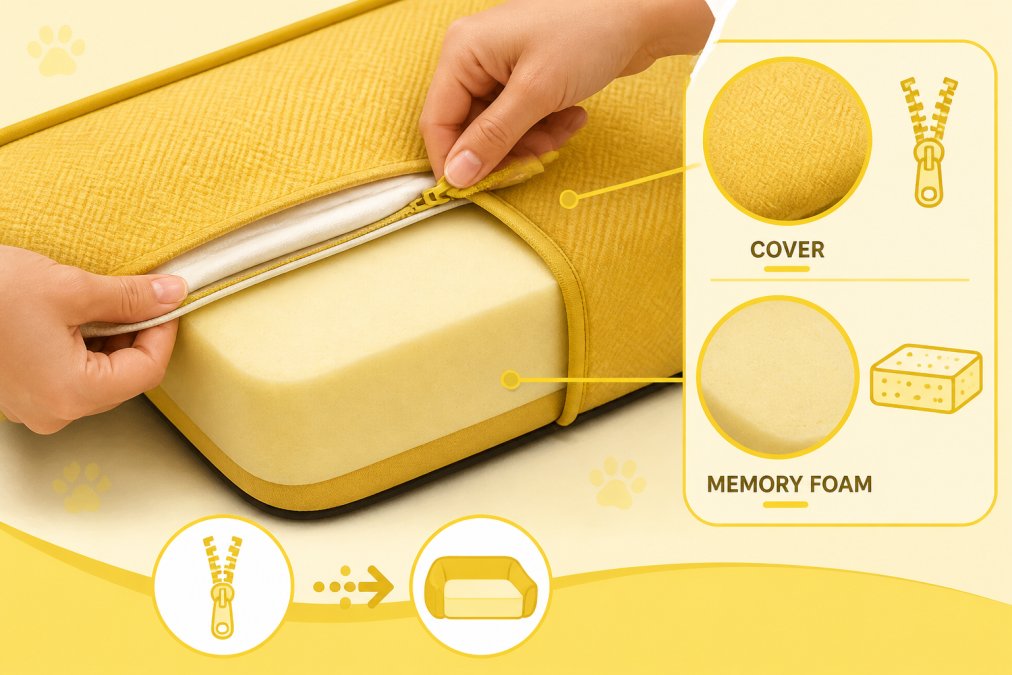
Start by removing the cover if your bed has a removable one. Unzip carefully and set the foam core aside, you'll handle it separately. Vacuum the cover thoroughly on both sides to remove loose pet hair and dander before washing.
Place the cover in the washing machine alone, never with other items. Use cold water and a gentle cycle to prevent shrinking or damage to fabric. Add your pet-safe detergent according to the package directions, but use slightly less than recommended for regular laundry. Avoid fabric softeners entirely, they leave residue that irritates dog skin and reduces the cover's moisture-wicking properties.
For the bed's foam core, never submerge it in a washing machine. Instead, spot-clean visible stains with a mixture of cold water and pet-safe detergent. Use a soft brush or cloth to gently work the solution into affected areas, then rinse with cool water until the soap is completely gone. Squeeze out excess water gently, never wring or twist the foam, as this damages its structure.
If your bed doesn't have a removable cover, wash the entire bed on a gentle cycle with cold water. Check the manufacturer's guidelines first, as some orthopedic beds with waterproof liners require hand-washing instead. NovelPet Store's orthopedic beds with waterproof liners handle machine washing on gentle cycles, but always verify before proceeding.
Drying Methods and Preventing Mold
Never use a dryer on high heat, this damages fabric and can degrade memory foam. Instead, hang the cover to air dry in direct sunlight when possible. Sunlight acts as a natural sanitizer and eliminates odors without chemicals. If weather doesn't permit outdoor drying, use a dryer on the lowest heat setting or air-dry indoors.
For the foam core, air drying is the only safe option. Place it in a well-ventilated area away from direct heat sources. Prop it upright or at an angle to ensure air circulates on all sides. This process typically takes 24-48 hours depending on humidity and air circulation. Never rush this step, incomplete drying creates conditions for mold and mildew growth.
Ensure complete dryness before reassembling. Any moisture trapped inside accelerates bacterial growth and creates the musty smell many dog owners struggle with. If your region has high humidity, consider using a fan to speed up the drying process.
How to Get Dog Smell Out of Bed
Dog odor typically comes from a combination of sweat, oils, bacteria, and urine residue. Addressing it requires both prevention and targeted treatment. The most effective approach combines regular washing with odor neutralization between deep cleans.
During regular washing, add a cup of white vinegar to the rinse cycle. Vinegar neutralizes odors naturally without the chemical smell of commercial pet odor removers. It also helps eliminate bacteria that cause persistent smells. Some pet owners worry about vinegar scent, but it dissipates completely during drying.
For stubborn odors, soak the cover in cold water with baking soda for 30 minutes before washing. Use about half a cup of baking soda per gallon of water. Baking soda absorbs odors rather than masking them, making it more effective than perfumed sprays. After soaking, wash normally with your pet-safe detergent.
Between full washes, sprinkle baking soda directly on the bed surface, let it sit for 15-20 minutes, then vacuum thoroughly. This maintenance step prevents odor accumulation and keeps the bed fresher longer. Repeat this process weekly for maximum effectiveness.
If odor persists after washing and drying, the issue may be inside the foam core itself. In this case, spray the foam lightly with a mixture of equal parts water and white vinegar, then air dry completely in sunlight. Never saturate the foam, just a light mist is sufficient.
Cleaning Non-Washable Dog Beds
Not all dog beds are machine-washable, particularly high-end orthopedic models with specialized foam cores or waterproof linings. These require different cleaning approaches that protect their structural integrity and support properties.
For non-washable beds, start with thorough vacuuming using an upholstery attachment. This removes loose pet hair, dander, and surface debris. Vacuum both the top and sides, paying special attention to seams and crevices where debris accumulates.
Spot-clean stains with a soft cloth and cold water mixed with pet-safe detergent. Work the solution gently into the affected area, then blot with a damp cloth to remove excess moisture. Never scrub aggressively, this can damage fabric or push stains deeper into the foam.
For urine accidents on non-washable beds, act quickly. Blot the area with paper towels to remove as much liquid as possible, then apply a mixture of equal parts white vinegar and water. Let it sit for 10-15 minutes, then blot again. This neutralizes urine odor and bacteria. Follow with a light spray of water to rinse, then allow to air dry completely.
Deep cleaning non-washable beds requires a different approach. Use a handheld carpet cleaner with pet-safe solution if available, or rent an upholstery cleaner for occasional deep cleans. Always test the cleaning solution on a hidden area first to ensure it doesn't damage the fabric or cause discoloration.
Spot Cleaning and Maintaining Between Full Washes
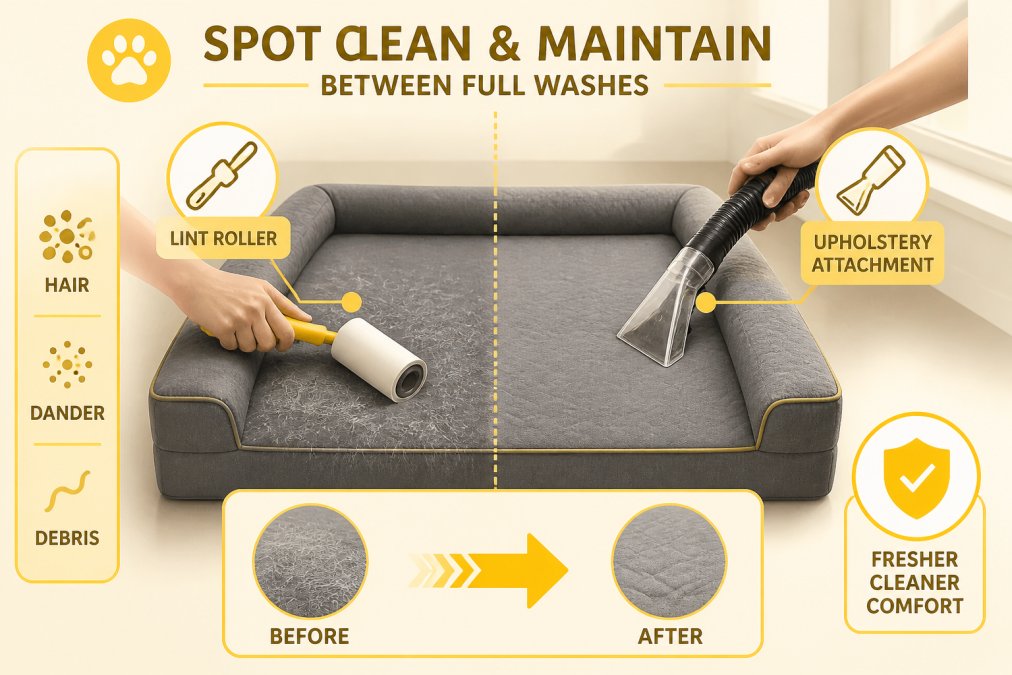
Spot cleaning is your best defense against odor, stains, and the need for frequent full washes. A quick maintenance routine 2-3 times weekly keeps beds fresher and extends the time between deep cleans.
Start with a lint roller or upholstery brush to remove loose pet hair and dander from the surface. This simple step eliminates the bulk of debris before it has time to settle into fabric fibers. Spend just 5-10 minutes on this task, focusing on areas where your dog sleeps most heavily.
For minor stains, address them immediately. Blot with a damp cloth and a small amount of pet-safe detergent, then rinse with clean water. The faster you treat a stain, the easier it is to remove completely. Dried stains become increasingly difficult to clean and may set permanently.
Sprinkle baking soda on the bed surface once weekly, let it sit for 15-20 minutes, then vacuum thoroughly. This absorbs odors and keeps the bed smelling fresh between washes. It's a simple, chemical-free maintenance step that makes a noticeable difference.
For beds in high-humidity environments, air circulation is critical between washes. Prop the bed against a wall or use a small fan to encourage airflow underneath and around it. This prevents moisture from accumulating and creating conditions for mold or mildew growth.
Common Mistakes to Avoid When Cleaning Dog Beds
Many well-intentioned pet owners accidentally damage their dog beds or reduce their effectiveness through common cleaning mistakes. Understanding these pitfalls helps you maintain your bed's quality and supportive properties.
Using hot water is one of the most frequent errors. High temperatures can shrink fabric covers, damage memory foam, and degrade waterproof linings. Always use cold water for washing, even if you think hot water will clean better. Cold water is equally effective with proper detergent and gentler on bed materials.
Fabric softeners and dryer sheets seem like they'd improve comfort, but they actually harm dog beds. These products leave residue that reduces moisture-wicking properties, traps odors, and irritates sensitive skin. Skip them entirely and rely on proper drying instead.
Overloading the washing machine with other items is another mistake. Dog beds need space to move freely in the water for thorough cleaning. Washing a bed cover with regular laundry compromises both the cleaning quality and can transfer lint or residue to the bed.
Never use bleach or harsh chemical cleaners on dog beds. These damage fabric, can harm memory foam, and leave chemical residue that irritates skin. Pet-safe detergents are specifically formulated to clean effectively without these harsh components.
Rushing the drying process leads to moisture retention and mold growth. Some pet owners use high heat to speed things up, but this damages the bed. Patient air drying, preferably in sunlight, is the safest approach. It takes longer but protects your investment and your dog's health.
Skipping the vacuuming step before washing means loose hair gets tangled in fabric during the wash cycle. This creates matting and makes the bed harder to clean in future washes. Always vacuum thoroughly before washing.
Conclusion
Keeping your dog's bed clean protects their health, extends the bed's lifespan, and eliminates persistent odor problems that frustrate many pet owners. The process is straightforward once you understand your specific bed's material and care requirements.
For senior dogs and those with arthritis, a clean orthopedic bed from NovelPet Store becomes even more critical. Our orthopedic memory foam beds with removable, machine-washable covers and waterproof liners are specifically designed for easy maintenance while providing the joint support your aging dog needs. The removable cover system means you can wash frequently without damaging the supportive foam core, and the waterproof liner protects against accidents. Start with regular washing every 2-4 weeks, add spot-cleaning maintenance between washes, and your dog will have a fresh, hygienic sleeping surface that supports their comfort for years to come.
Frequently Asked Questions
How often should a dog bed be washed?
Most dog beds should be washed every 1-2 weeks, depending on your dog's activity level and whether they have accidents. Dogs with arthritis or senior pets who spend more time resting on their beds may need weekly washing to maintain hygiene and prevent bacterial growth. If your dog is prone to accidents or has allergies, increase frequency to weekly or even twice weekly. Machine-washable beds with removable covers make this routine manageable.
Can I use fabric softener or regular detergent when washing my dog's bed?
Avoid fabric softener, it can irritate your dog's skin and reduce the water-resistant properties of the lining. Use a pet-safe detergent instead, which is gentler on sensitive skin and free from harsh chemicals. Enzyme-based cleaners work well for breaking down organic matter and stubborn odors without synthetic fragrances that might bother your pet.
Is it safe to put a dog bed in the dryer?
Most memory foam dog beds should air dry rather than go in the dryer. High heat can damage the foam and the fabric. If your bed has a removable cover, you can tumble dry it on low heat, but always air dry the foam pad itself. Hang the cover or lay it flat, and ensure the bed is completely dry before your dog uses it again to prevent mildew growth.
How do I remove stubborn dog hair from a bed?
Use a lint roller or upholstery attachment on a vacuum before washing for quick removal of loose hair and dander. For embedded hair, soak the cover in cold water for 30 minutes, then gently brush with a soft-bristled brush before washing. If hair persists after washing, repeat the lint roller step while the cover is still damp, this makes hair easier to lift away.
This article was written using GrandRanker