

How to Clean Memory Foam Dog Beds: A Complete Guide
Table of Contents
- What You'll Need Before Cleaning Memory foam Dog Beds
- Step 1: Vacuum and Remove the Outer Cover
- Step 2: Spot Clean and Deodorize the Foam Insert
- How to Get Urine Out of Memory Foam Dog Beds
- Best Enzyme Cleaner for Dog Beds: What to Look For
- How to Dry Memory Foam After Washing Without Damage
- How Often to Clean Your Dog's Memory Foam Bed
- Conclusion
Last Updated: August 9, 2026
What You'll Need Before Cleaning Memory Foam Dog Beds
Proper preparation prevents damage to orthopedic beds. Getting supplies ready before you start means you won't be hunting for items mid-clean with wet hands.
Here's what you'll need:
- A vacuum cleaner with an upholstery or brush attachment
- Mild, pet-safe detergent (fragrance-free is best)
- Enzymatic cleaner (essential for urine and biological stains)
- Baking soda
- White vinegar diluted with water (50/50 solution)
- Clean white cloths or absorbent towels
- A large basin or bathtub for rinsing
- Access to outdoor space or a well-ventilated area for drying
Memory foam dog beds are dense, porous, and highly absorbent, which makes them comfortable for dogs with arthritis but also means they trap moisture, dander, bacteria, and odors deep inside. Improper cleaning is risky: submerge the foam in water without a drying plan, and you create the perfect environment for mildew growth.

Check the care label on your specific bed before starting. Some orthopedic dog beds include a waterproof liner between the cover and foam, which changes your cleaning approach.
| Cleaning Task | Supplies Needed | Frequency |
|---|---|---|
| Vacuuming the bed surface | Vacuum with upholstery attachment | Weekly |
| Washing the outer cover | Mild detergent, washing machine | Every 2-4 weeks |
| Spot cleaning the foam | Enzymatic cleaner, white cloth | As needed |
| Deodorizing the foam | Baking soda, white vinegar solution | Monthly |
| Full foam deep clean | Basin, mild detergent, towels | Every 2-3 months |
Step 1: Vacuum and Remove the Outer Cover
Start every cleaning session with the vacuum. Dog beds accumulate loose hair, dried dander, dirt, and debris on the surface. Skipping this step means debris either clogs your washing machine or gets pressed deeper into the fabric. Use your vacuum's upholstery or brush attachment and work in slow, overlapping passes to lift embedded fur.
Once vacuumed, unzip and remove the outer cover. Most quality orthopedic dog beds are designed with removable covers for this reason. If your zipper is stiff, rub it with beeswax or a dry bar of soap to free it without damage.

Machine Washing the Cover Safely
Use cold water on a gentle cycle. Hot water causes shrinkage and degrades waterproof coatings faster.
Choose mild, fragrance-free detergent. Dogs have sensitive senses of smell, and strong artificial fragrances can discourage them from using their bed. According to RSPCA pet care guidance, dogs rely heavily on scent for comfort and familiarity.
Skip fabric softener entirely. It reduces absorbency and can irritate sensitive skin.
Protecting Waterproof Liners During Washing
Waterproof liners protect memory foam from moisture, urine, and spills. Never wash them in hot water or tumble dry on high heat, heat breaks down the waterproof coating permanently. Always wash on cold, gentle cycle, and air dry completely before reassembling.
If your liner shows signs of cracking or peeling, it has lost its waterproof properties and should be replaced. A compromised liner means moisture reaches the foam directly, accelerating odor and mildew growth.
Step 2: Spot Clean and Deodorize the Foam Insert
The foam insert should never go into the washing machine. Memory foam is extremely porous and absorbent; submerging it saturates the interior with water that cannot escape quickly, and agitation can tear the foam structure.
Spot cleaning is the correct method:
- Lay the foam insert flat on a clean, dry surface
- Identify stained or soiled areas
- Mix mild, pet-safe detergent with cold water
- Dampen a clean white cloth with the solution (do not soak it)
- Gently blot the stained area, working from the outside inward
- Avoid rubbing, which spreads the stain deeper
- Rinse by blotting with a clean cloth dampened with plain cold water
- Press dry towels firmly against the cleaned area to absorb moisture
To deodorize, sprinkle baking soda generously over the entire foam surface. Let it sit for at least 30 minutes. Baking soda draws out moisture and odor without introducing more liquid. Vacuum it off thoroughly.
How to Get Urine Out of Memory Foam Dog Beds
Urine accidents are the most challenging cleaning problem. Speed is everything, fresh urine is far easier to treat than dried urine.
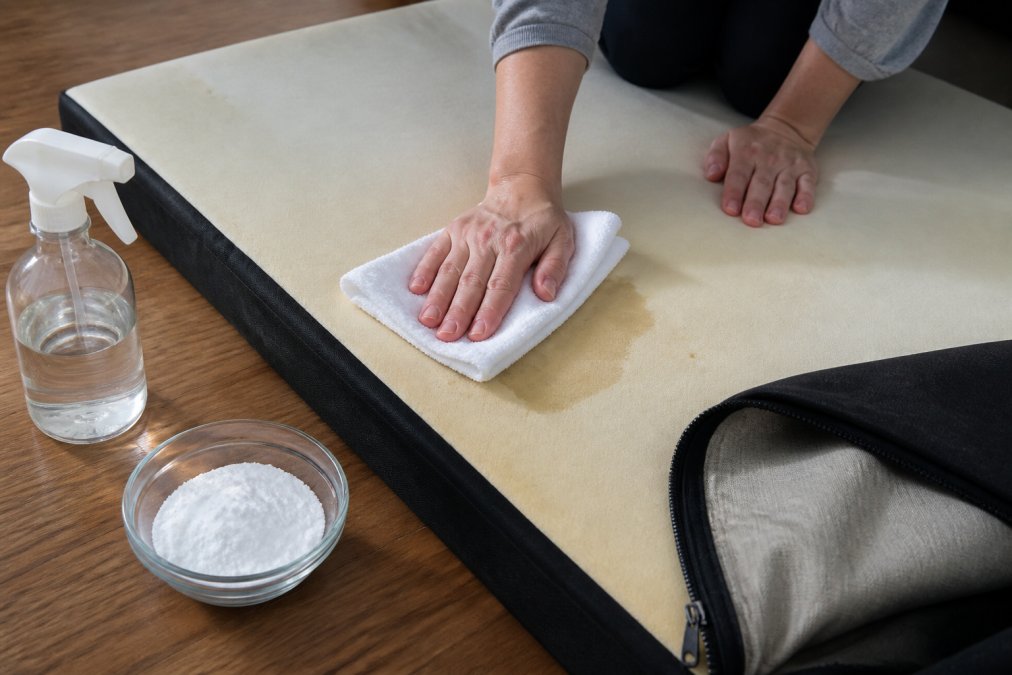
For fresh urine accidents:
- Blot up as much liquid as possible immediately using absorbent towels
- Sprinkle baking soda generously over the wet area for 10-15 minutes
- Vacuum off the baking soda
- Apply an enzymatic cleaner to the affected area. Enzymatic cleaners break down uric acid crystals, the source of persistent odor. Standard detergents only mask the smell temporarily.
- Let the enzymatic cleaner sit for the time specified on the label (usually 10-15 minutes)
- Blot dry with clean cloths. Do not rinse with excess water.
- Allow to air dry completely before replacing the cover
For dried urine stains:
Lightly dampen the area with cold water first to rehydrate the stain, then follow the enzymatic cleaner process. You may need to repeat two or three times for older stains.
A waterproof liner stops urine from reaching the foam entirely. As The Kennel Club's dog care resources notes, senior dogs and those with mobility issues are more prone to nighttime accidents. A waterproof liner means you're cleaning the liner and cover rather than treating the foam directly.
Best Enzyme Cleaner for Dog Beds: What to Look For
The best enzyme cleaner for dog beds is formulated specifically for pet waste, with clear pet-safe ingredients and no harsh chemical residues.
Check before buying:
- Specifically formulated for pet urine: General-purpose enzyme cleaners may not target uric acid effectively
- Pet-safe certification: Look for products confirmed safe after drying
- No artificial fragrances: Strong scents can discourage dogs from using their bed
- Suitable for foam: Some cleaners are designed for hard surfaces only
- Clear dwell time instructions: Enzymes need adequate contact time to work
A common mistake is wiping off the enzymatic cleaner too quickly. The enzymes need time to break down odor-causing compounds.
White vinegar helps with surface odors and has mild antibacterial properties, but it does not break down uric acid like enzymatic cleaners do. For regular maintenance and mild odors, diluted white vinegar is useful. For genuine urine treatment, use an enzymatic cleaner.
How to Dry Memory Foam After Washing Without Damage
Drying is where most cleaning efforts fail. Inadequate drying causes mildew growth inside memory foam, which is essentially impossible to fully remove.
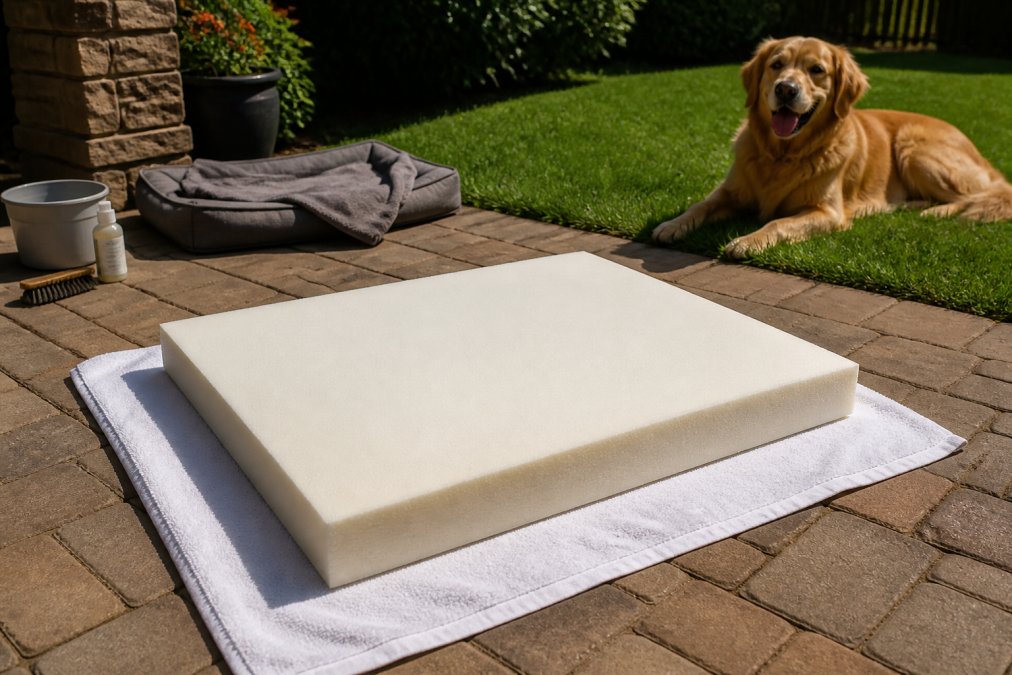
Memory foam must air dry completely through the core before the cover goes back on. Depending on foam thickness and ambient conditions, this takes 24 to 48 hours.
The correct drying method:
- Press as much moisture out as possible using dry towels and firm pressure
- Place the foam flat in a well-ventilated area, ideally outdoors in indirect sunlight or indoors near an open window
- Elevate the foam on a drying rack to allow air circulation underneath
- Flip the foam every few hours for even drying
- Avoid direct, intense sunlight for extended periods as UV exposure degrades foam
- Test for dryness by pressing firmly in the center. If any coolness or moisture is detectable, it needs more time
What to avoid:
- Tumble drying: heat degrades foam and mechanical action damages structure
- Placing the cover back on while damp: this traps moisture and creates conditions for mildew
- Using a hairdryer or direct heat: surface drying without core drying creates hidden moisture pockets
According to NHS guidance on mould and damp prevention, mould begins developing within 24-48 hours in damp conditions. For thick orthopedic beds, plan for a full 48 hours of drying time.

How Often to Clean Your Dog's Memory Foam Bed
Cleaning frequency depends on your dog's habits, health status, and time spent on the bed. The outer cover should be washed every two to four weeks under normal conditions. Dogs that shed heavily, have skin conditions, or spend most of the day on their bed benefit from washing every one to two weeks. The foam insert needs spot cleaning and deodorizing roughly once a month, with a deeper clean every two to three months.
Weekly vacuuming is the single highest-impact maintenance habit. It takes five minutes, requires no drying time, and significantly extends the period between full cleans.
Signs the bed needs cleaning sooner:
- Visible staining on the cover or foam
- Noticeable odor even after airing out
- Your dog seems reluctant to use the bed
- Increased scratching or skin irritation
- Any urine or biological accident
Waterproof liners on quality orthopedic dog beds keep the foam clean even when the cover is soiled, meaning spot cleaning incidents rarely require treating the foam directly.
For dogs with heavy shedding or those who come in from muddy walks, consider placing a washable blanket over the bed surface. This catches daily dirt and can be washed far more frequently than the bed itself.
Keeping a memory foam dog bed genuinely clean is one of the most practical things you can do for a dog dealing with arthritis or joint pain. A hygienic, fresh-smelling bed encourages your dog to use it consistently, which means they're getting the orthopedic support they need. NovelPet Store's orthopedic memory foam beds are designed with washable, removable covers and waterproof liners that make this process straightforward. Get started with NovelPet Store and give your dog a clean, supportive sleeping environment that holds up to real-life use.
Frequently Asked Questions
Can memory foam dog beds be washed in a washing machine?
The foam insert itself should never go in a washing machine. Submerging memory foam causes it to absorb too much water, which damages its structure and creates ideal conditions for mildew. However, most orthopedic dog beds come with a removable cover that is machine washable on a cold, gentle cycle with mild detergent. Always check the care label first. The foam insert should only ever be spot cleaned or hand-rinsed, then left to air dry completely.
Is it safe to use vinegar or baking soda on memory foam?
Both are safe and effective for cleaning memory foam dog beds when used correctly. White vinegar diluted with water works as a natural sanitizer and odor neutralizer. Baking soda can be sprinkled directly onto the foam surface, left for several hours to absorb moisture and odors, then vacuumed off using an upholstery attachment. Avoid soaking the foam with either solution. Always allow the foam to air dry fully before replacing the cover to prevent mildew.
How often should you clean a dog bed to prevent odors?
For most dogs, washing the cover every one to two weeks and deep cleaning the foam insert monthly keeps odors and dander under control. Senior dogs or those with accidents, skin conditions, or heavy shedding may need the cover washed weekly. A quick vacuum of the foam with an upholstery attachment between washes removes loose hair and dander and extends the time between full cleans. Regular maintenance is far easier than tackling deep-set stains and odors.
What is the best way to dry a memory foam insert without damaging it?
Air drying flat is the only safe method for memory foam. Lay the insert on a clean, dry surface in a well-ventilated room or outdoors in indirect sunlight. Never use a tumble dryer, as heat breaks down foam cells and causes shrinkage. Drying can take 24 to 48 hours depending on thickness and humidity. Press a dry towel firmly onto the foam first to absorb excess moisture and speed up the process. The foam must be completely dry before the cover goes back on.
This article was written using GrandRanker