

Buy Orthopedic Dog Bed Online: 2026 Guide
Table of Contents
- What to Look for When You Buy an Orthopedic Dog Bed Online
- Memory Foam Dog Bed Benefits for Joint Support
- Best Orthopedic Dog Beds for Large Dogs
- How to Manage Arthritis in Large Dogs with Proper Bedding
- Durability, Maintenance, and Long-Term Value
- Why Buy from NovelPet Store
- Conclusion
- Frequently Asked Questions
Last Updated: September 4, 2026
Choosing an orthopedic dog bed for a large, aging dog hinges on understanding foam density, not fabric color. A standard cushion fails to support a 40-kilogram Labrador with arthritis, leading to restless nights and stiffness (peer-reviewed research). This guide breaks down the technical specifications that determine whether a bed will relieve joint pressure or flatten within months.
Buying an orthopedic dog bed is like buying a quality mattress: the internal support structure dictates the outcome. High-density memory foam, water-resistant barriers, and breed-specific sizing directly influence your dog's mobility and comfort. This guide shows how to evaluate these features, what to expect to pay, and which configurations suit giant breeds best.
What to Look for When You Buy an Orthopedic Dog Bed Online
The most critical factor is the density and thickness of the memory foam core, not the cover's plushness. A soft-feeling bed may offer zero support under a heavy dog, allowing hips to sink to the floor. Choose solid foam slabs rather than shredded fill, which compresses and shifts away from pressure points.
Memory Foam Density and Thickness
High-density memory foam is the benchmark for therapeutic support. A 7-inch thick, multi-layer foam system prevents "pancaking" and allows proper weight distribution, keeping the spine aligned during sleep (peer-reviewed research).
Waterproof and Washable Covers
Incontinence is common with senior pets, making a waterproof liner essential (vet.cornell.edu). The cover should be removable and machine washable. Durable microsuede or cotton-blend fabric that resists tearing extends the bed's lifespan.
Size and Breed Compatibility
Measure your dog from nose to tail base and add 10-15 centimeters for stretching room. A bed that is too small forces a curled position, negating orthopedic benefits. Giant breeds like Great Danes need XL configurations.
Memory Foam Dog Bed Benefits for Joint Support
Memory foam dog bed benefits directly address joint pain mechanics. The primary advantage is pressure relief: the foam conforms to the dog's body shape, reducing stress on hips, elbows, and shoulders, critical for breeds prone to hip dysplasia and arthritis.
Pressure Relief and Weight Distribution
Quality orthopedic foam distributes weight evenly, preventing concentrated pressure points that cause pain and restlessness. This improves circulation and reduces sores or calluses from hard surfaces.
Improved Sleep Quality and Mobility
Dogs with arthritis struggle to get comfortable, leading to fragmented sleep. A supportive bed enables deeper rest and makes it easier for stiff dogs to rise in the morning without fighting to extract themselves from a sunken surface.
Best Orthopedic Dog Beds for Large Dogs
The Barker Beds range represents the gold standard in engineering and material quality. These beds are constructed with a specific 3-layer foam system designed to handle significant weight and provide clinical support, a critical distinction for heavy breeds.

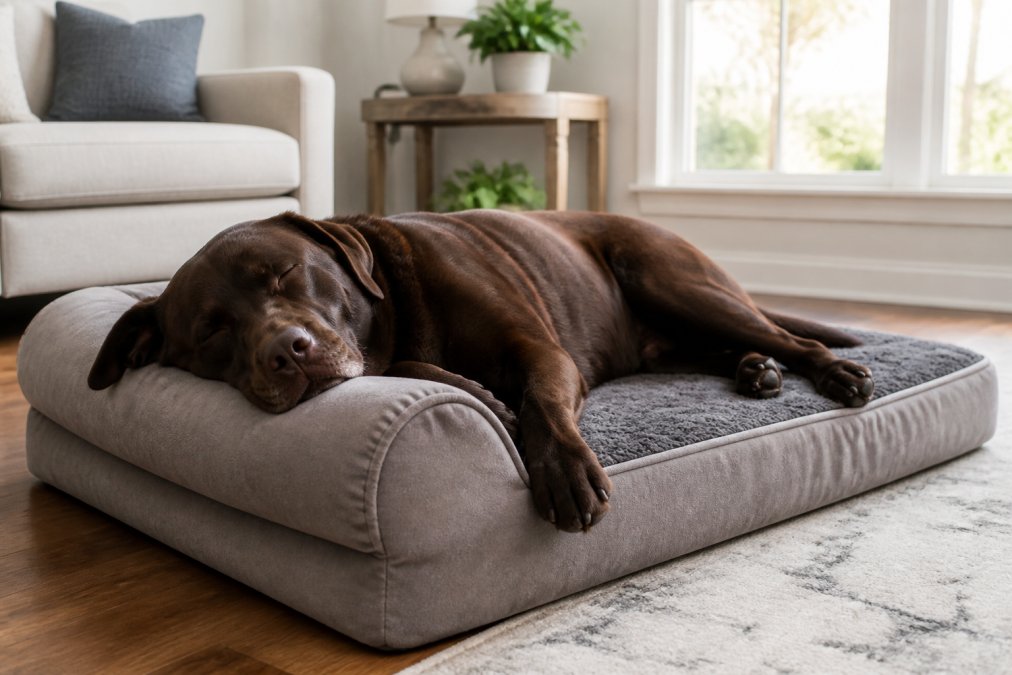
Barker Beds XL: Premium Support for 75-120 Pound Dogs
The Barker Beds XL is engineered for dogs weighing 75-120 pounds. It features a 7-inch thick, 3-layer foam system with a firm base, support layer, and soft comfort layer. It includes a headrest for cervical support and a machine-washable, water-resistant microsuede cover, priced at €353.66.
Barker Beds Giant: Maximum Comfort for Extra-Large Breeds
The Barker Beds Giant offers a 60" x 48" sleep surface with 7-inch therapeutic foam, ideal for German Shepherds and Great Danes. Handcrafted in the USA with CertiPUR-US certified foam and burgundy microsuede cover, available for €386.21.
| Feature | Barker Beds XL | Barker Beds Giant |
|---|---|---|
| Weight Range | 75-120 lbs | 100-300 lbs |
| Dimensions | 52" x 36" x 7" | 60" x 48" x 7" |
| Foam Thickness | 7-inch 3-layer | 7-inch 3-layer |
| Cover | Washable Microsuede | Washable Microsuede |
| Price | €353.66 | €386.21 |
Crate-Compatible Options for Space-Conscious Owners
For crate-bound dogs, an XL pad measuring 47" x 29" x 4" fits standard 48" x 30" crates. It uses gel-infused memory foam and includes a dual-layer cover with waterproof internal liner, priced at €87.10.
How to Manage Arthritis in Large Dogs with Proper Bedding
Managing arthritis in large dogs requires bedding that reduces joint stress. While medication addresses inflammation internally, a proper orthopedic bed is passive therapy that works 24/7 to support mobility.
Orthopedic Support and Joint Health
The primary mechanism is reducing load on arthritic joints. High-density foam distributes weight away from hip and elbow joints, maintaining flexibility and reducing morning stiffness.
Integration with Physical Therapy and Vet Care
Veterinarians recommend orthopedic bedding alongside physical therapy and surgical recovery. A firm surface enables safer transitions when rising, crucial for post-operative care and maintaining muscle mass.
Durability, Maintenance, and Long-Term Value
Investing in a premium bed requires understanding its lifespan and maintenance needs. A cheap bed that flattens in six months is a poor investment compared to a high-quality bed lasting years. Key differentiators are foam quality, cover durability, warranty protection, and knowing when to replace it.
Foam Degradation and Warranty Protection
High-density foam resists compression and maintains shape over time. Barker Beds are backed by a 10-year warranty protecting against "pancaking" or sagging, ensuring consistent support for years.

Testing for Foam Degradation: When to Replace Your Bed
Dog bed degradation is harder to detect than mattress wear because dogs use it regardless of support level. A degraded bed may feel soft but offer zero joint support. Assess therapeutic value with these tests:
The Hand-Press Test: Press your hand firmly into the center of the bed for 10 seconds, then release. If your handprint remains visible for more than 2-3 seconds, the foam has lost significant density and is no longer providing proper support. A healthy orthopedic foam should spring back within 1-2 seconds.
The Weight Distribution Test: Place a weight (such as a 20-pound dumbbell or bag of sand) in the center of the bed and observe the surface. If the weight sinks more than 2 inches below the surrounding surface, or if you can feel the floor beneath the foam when you press down, the support layer has compressed and the bed should be replaced.
The Visual Inspection: Look for permanent indentations, especially in the areas where your dog's hips and shoulders rest. A slight body-shaped depression is normal, but deep valleys or areas where the cover is sagging indicate the foam has lost its structural integrity.
The Posture Check: Observe your dog's sleeping position. If your dog is struggling to get up in the morning, shifting positions frequently, or avoiding the bed in favor of the floor, the bed may no longer be providing adequate support, even if it looks intact.
Most high-density orthopedic beds maintain therapeutic properties for 5-7 years; heavier dogs (over 100 pounds) may see degradation in 3-5 years. Replacing is more cost-effective than restoring.
Machine-Washable Covers and Water Resistance
Easy maintenance extends bed longevity. A removable, machine-washable cover is essential. A waterproof internal liner protects foam from liquids, the primary cause of degradation and odor. The XL crate bed features a two-layer cover with waterproof internal zippered cover.
Wash covers every 2-4 weeks in warm water with mild detergent. If accidents occur, wipe the waterproof layer with a damp cloth and air dry completely. Trapped moisture causes mold and accelerates degradation.
Extending Bed Life Through Proper Care
Rotate the bed monthly to distribute wear evenly. Store in a cool, dry location away from direct sunlight, as UV exposure degrades foam and fabric. Alternating between beds extends lifespan.
Why Buy from NovelPet Store
Choosing the right retailer ensures you receive a genuine, high-quality product rather than a mislabeled import. NovelPet Store curates vet-recommended, Made in USA products, guaranteeing strict safety and quality standards that support your dog's health.
You are paying for CertiPUR-US certified foams, 10-year warranties, and clinically proven support structures. Prices range from €44.41 to €386.21, accommodating various needs while prioritizing joint health and longevity.
Conclusion
Selecting the right bed is a critical decision for managing your large dog's arthritis and ensuring their comfort in their golden years. Focus on high-density foam thickness, waterproof liners, and breed-specific sizing to avoid the common pitfalls of cheap, unsupportive beds that flatten quickly. Integrating a proper orthopedic bed into your dog's care routine works alongside veterinary treatment to improve mobility and sleep quality.
At NovelPet Store, we understand the challenge of finding a bed that withstands the weight of a giant breed while providing genuine joint relief. Our range of Barker Beds XL and Giant models offers the 7-inch, multi-layer foam support and durable, washable covers that your dog needs. Get started with NovelPet Store and give your loyal companion the gift of pain-free rest and a higher quality of life.
Frequently Asked Questions
Do orthopedic dog beds really help with arthritis?
Yes. Orthopedic beds with high-density memory foam reduce pressure on joints and distribute weight evenly, which alleviates pain points in the hips, elbows, and spine. Dogs with arthritis experience improved mobility and better sleep quality when using properly designed orthopedic beds. Look for beds with at least 4 inches of solid memory foam and a 3-layer structure that includes a support base, middle cushion, and comfort top layer.
What is the difference between egg-crate foam and solid memory foam for dogs?
Solid memory foam conforms to your dog's body shape and maintains consistent support throughout the bed's life, making it ideal for dogs with severe joint pain. Egg-crate foam features a textured surface that improves airflow and is often used in combination with memory foam for balanced comfort and breathability. For arthritis relief, solid high-density memory foam provides superior pressure relief, while egg-crate foam works well as a secondary layer for additional support.
What size orthopedic dog bed should I buy for my large dog?
Measure your dog from nose to base of tail while lying down, then add 6-12 inches for comfortable stretching. For dogs 75-120 pounds, an XL bed (52 x 36 inches) works well. For dogs over 100 pounds, a Giant size (60 x 48 inches) provides ample space. Check product specifications for weight ratings to ensure the foam density matches your dog's size and weight distribution needs.
How do I know if my dog needs an orthopedic bed?
Signs your dog needs an orthopedic bed include difficulty rising from rest, limping or favoring certain limbs, reluctance to climb stairs, excessive licking of joints, or visible stiffness after sleep. Senior dogs over 7 years old, large and giant breeds prone to hip dysplasia, and dogs with diagnosed arthritis benefit most. Even young large-breed dogs benefit from orthopedic support as a preventative measure. Consult your vet if your dog shows joint discomfort to confirm the need for supportive bedding.
This article was written using GrandRanker