

Is Memory Foam Good for Dogs? A 2026 Guide
Table of Contents
- What Is Memory Foam and How Does It Work for Dogs?
- Orthopedic Dog Bed Benefits for Senior and Arthritic Dogs
- How to Manage Arthritis in Large Dogs with Memory Foam Support
- Memory Foam vs. Other Dog Bed Materials: A Comparison
- Safety Concerns: Off-Gassing, Toxicity, and What to Look For
- Cleaning, Maintenance, and Lifecycle of Memory Foam Beds
- Signs Your Dog Needs a New Bed and How to Choose the Right One
- Frequently Asked Questions
Last Updated: September 1, 2026
What Is Memory Foam and How Does It Work for Dogs?
Memory foam is a viscoelastic material that responds to body heat and pressure, molding itself to your dog's unique contours before slowly returning to its original shape when pressure is removed. For dogs with joint pain, arthritis, or mobility issues, memory foam redistributes weight evenly, reducing pressure point concentration that can aggravate existing discomfort.
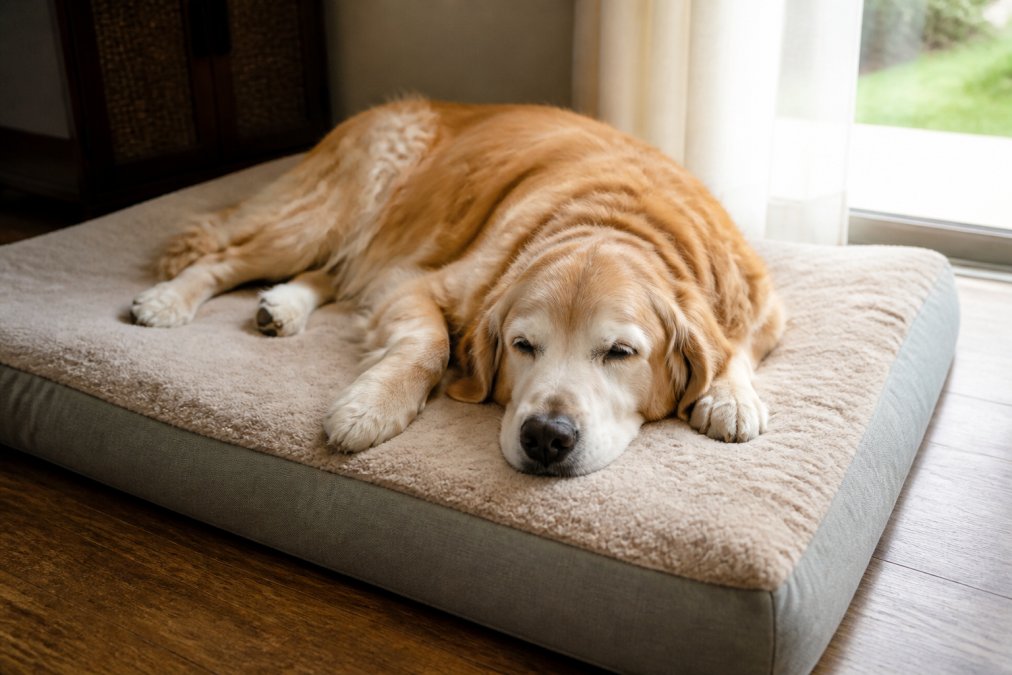
The technology originated in aerospace applications but has become standard in orthopedic pet bedding. When your dog lies down, the material softens in response to body heat, creating a customized support surface. This weight distribution is especially valuable for larger breeds and senior dogs whose joints bear significant load throughout the day. Higher-density foams maintain their supportive properties longer and resist sagging that reduces effectiveness over time.
Orthopedic Dog Bed Benefits for Senior and Arthritic Dogs
An orthopedic dog bed with memory foam provides targeted relief for dogs experiencing joint deterioration, arthritis, or age-related mobility decline. The primary benefit is pressure relief, by distributing weight evenly across the sleeping surface, these beds reduce concentrated stress on joints like hips, shoulders, and elbows.

Senior dogs often struggle with stiffness after rest periods. Memory foam beds minimize shock to joints when your dog rises from sleep, making morning movement noticeably easier. The supportive structure also improves spinal alignment during sleep, reducing cumulative strain over months and years. For large breed dogs prone to hip dysplasia or elbow dysplasia, orthopedic support during rest periods is particularly important, as rest is when the body repairs itself.
How to Manage Arthritis in Large Dogs with Memory Foam Support
Managing arthritis in large dogs requires a multi-faceted approach, and sleeping surface quality is one of the most impactful factors you control. A dog weighing 75-120 pounds places tremendous load on joints during both activity and rest. Memory foam beds designed for large dogs provide the density and support needed to handle that weight without bottoming out or sagging.
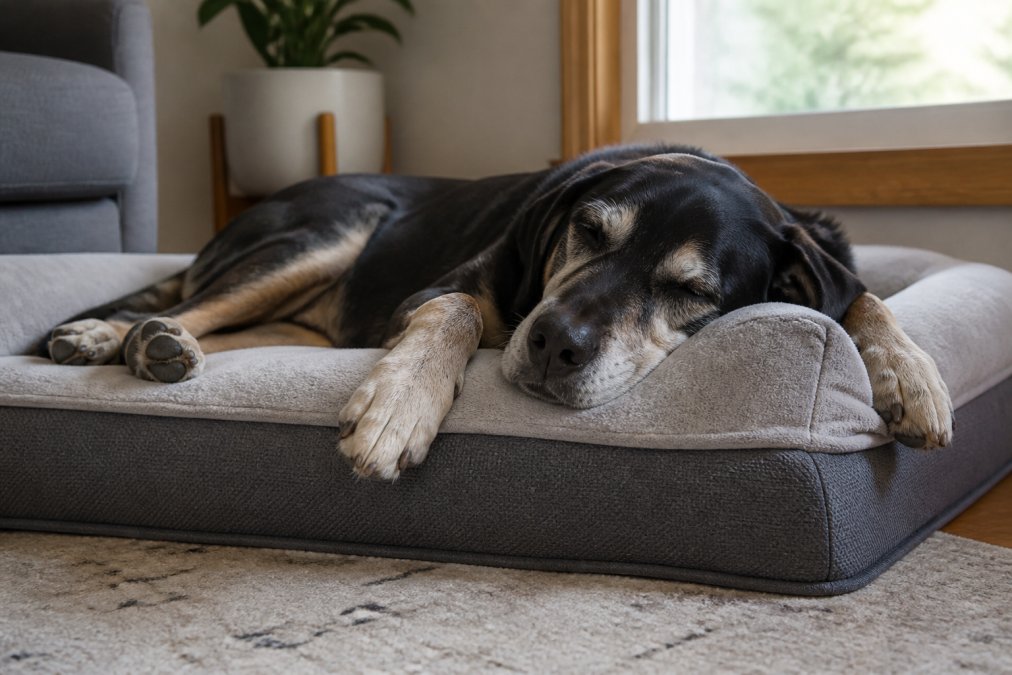
The Barker Beds XL Orthopedic Dog Bed is engineered specifically for dogs in this weight range. With a 7-inch memory foam core and reinforced support base, it maintains structural integrity under sustained load. The elevated design with headrest support reduces pressure on the neck and cervical spine, areas where large dogs commonly experience arthritis-related discomfort.
Place the bed in a warm, draft-free location to minimize joint stiffness, as cold temperatures exacerbate arthritis symptoms. Combine orthopedic bedding with other arthritis management strategies: moderate, consistent exercise, weight management to reduce joint load, and veterinary guidance on pain management if needed.
Memory Foam vs. Other Dog Bed Materials: A Comparison
Different bed materials serve different purposes. Understanding the trade-offs helps you choose correctly for your dog's specific needs.
Memory Foam vs. Orthopedic Foam
Memory foam is viscoelastic and responds to heat and pressure. Orthopedic foam is typically firmer and denser, engineered for support without the conforming properties of memory foam. Orthopedic foam provides consistent, unchanging support but doesn't adapt to your dog's body shape. Memory foam offers both support and conformity, holding its shape under load while molding to contours. For arthritic dogs, memory foam generally outperforms pure orthopedic foam because it combines support with pressure relief.
| Material | Support Level | Pressure Relief | Durability | Best For |
|---|---|---|---|---|
| Memory Foam | High | Excellent | 3-5 years | Arthritic, senior, large dogs |
| Orthopedic Foam | High | Moderate | 4-6 years | Dogs needing firm support |
| Egg Crate Foam | Moderate | Good | 2-3 years | Budget-conscious owners |
| Traditional Foam | Low | Poor | 1-2 years | Young, healthy dogs |
Memory Foam vs. Egg Crate Foam
Egg crate foam features a textured surface designed to increase surface area and improve airflow. It provides some pressure relief through its convoluted shape but lacks the adaptive properties of memory foam. Egg crate foam compresses quickly and loses effectiveness within 12-24 months. Memory foam maintains its supportive properties for 3-5 years with proper care, making it more cost-effective despite higher upfront expense (peer-reviewed research).
Memory Foam vs. Traditional Beds
Traditional dog beds offer comfort but minimal orthopedic support. For dogs with arthritis or senior dogs, traditional beds often worsen discomfort by providing inadequate pressure relief and allowing sagging that creates poor sleeping posture.
Safety Concerns: Off-Gassing, Toxicity, and What to Look For
Memory foam manufacturing involves chemical processes, and some foam products release volatile organic compounds (VOCs) during initial use. This off-gassing creates odors and potentially harmful air quality, particularly concerning for dogs with respiratory sensitivity, allergies, or chemical sensitivities.
Understanding Off-Gassing and VOC Emissions
Off-gassing is the release of volatile organic compounds trapped in foam during manufacturing. Budget foams often off-gas noticeably for 4-8 weeks, while quality foams typically diminish within 1-3 weeks. Common VOCs released from lower-quality foam include formaldehyde, benzene, and toluene (the EPA). While acute exposure from a single bed is unlikely to cause severe illness, chronic low-level exposure in a dog's primary sleeping space compounds over months. Senior dogs, puppies, and dogs with existing respiratory conditions face elevated risk.
Certifications and Testing Standards
Look for beds with CertiPUR-US certification, which verifies that foam meets strict standards for chemical emissions, durability, and content. This certification ensures the foam contains no ozone-depleting substances, no PBDEs (brominated flame retardants), no heavy metals, low VOC emissions, and no formaldehyde above regulatory thresholds. CertiPUR-US testing is third-party verified and updated annually, making it the most reliable marker of chemical safety. Additionally, check whether the cover material has been tested for chemical treatments.
Managing Off-Gassing at Home
Initial Ventilation (Days 1-7): Unbox the bed in a well-ventilated area, ideally outdoors or in a garage with doors open, for 24-48 hours before bringing it into your dog's sleeping space.
Placement Strategy: Position the bed away from your dog's face and in a room where your dog spends only part of the day during the first 2-3 weeks.
Air Quality Monitoring: Open windows in the room where the bed is located for at least 2 hours daily during the first month. If your dog shows signs of respiratory irritation (coughing, sneezing, wheezing), increase ventilation further or consult your veterinarian.
Timeline Expectations: Most quality foams reach acceptable VOC levels within 2-4 weeks. If odor persists beyond 6 weeks or your dog shows ongoing respiratory symptoms, contact the manufacturer for a return or replacement.
Red Flags and When to Avoid a Product
Certain indicators suggest a foam bed carries higher chemical risk: no certification information available, unusually low price, persistent odor beyond 4 weeks, or your dog showing respiratory symptoms that correlate with bed introduction. If your dog falls into a high-risk category (breeds with respiratory predisposition or senior dogs with existing lung conditions), prioritize beds with CertiPUR-US certification.
Cleaning, Maintenance, and Lifecycle of Memory Foam Beds
Memory foam bed longevity depends heavily on proper care. Most quality beds last 3-5 years with appropriate maintenance, compared to 1-2 years for budget alternatives.
Daily and Weekly Maintenance
Washable covers are essential, particularly for dogs with incontinence or shedding issues. Most quality orthopedic beds include removable, machine-washable covers that can be laundered every 1-2 weeks. Wash covers in cool water on a gentle cycle and air-dry completely before replacing.
Spot-clean the foam surface weekly with a dry cloth to remove dust and hair. If visible dirt or minor spills occur, use a cloth lightly dampened with cool water and mild detergent. Blot gently, do not rub or scrub. Allow the area to air dry completely (4-6 hours minimum) before allowing your dog back on the bed.
The Water-Resistant Liner: Your First Line of Defense
Beneath the washable cover lies a water-resistant liner, a critical protective barrier that prevents urine, spilled water, or other moisture from penetrating to the foam core. If this liner fails, urine will seep into the foam, causing permanent odor and mold growth that cannot be reversed.
Inspect the liner monthly for tears, punctures, or separation from the foam. If your dog has had accidents, check the liner immediately for moisture penetration. If urine has reached the foam, the bed is no longer salvageable.
Preventing Moisture and Mold
Moisture is the primary enemy of memory foam longevity. Place the bed on a hard floor or low platform rather than directly on carpet. Ensure the room has adequate ventilation and is not excessively humid. Use a waterproof mat beneath the bed if it must be placed on carpet. Address accidents immediately.
Objective Metrics for Foam Degradation
The Hand-Press Test: Press your hand firmly into the foam for 5 seconds, then release. Quality foam should rebound to its original shape within 2-3 seconds. If the impression remains visible after 10 seconds, the foam has lost elasticity.
The Weight-Distribution Test: Observe whether your dog's spine appears aligned or whether the bed sags noticeably, creating a "hammock" effect. Excessive sagging indicates the foam can no longer support their body weight evenly.
The Thickness Measurement: Measure the foam thickness in high-use areas and compare to unused edge areas. A 7-inch foam bed that has compressed to 5-6 inches in the center is no longer providing adequate orthopedic support.
The Odor Persistence Test: Even after thorough cleaning, persistent odors indicate moisture has penetrated the foam or mold has colonized the material, warranting replacement.
Timeline and Replacement Indicators
Under normal use with proper maintenance, quality memory foam beds typically show these degradation patterns: Year 1-2 shows minimal degradation with full foam rebound; Year 2-3 shows slight compression in high-use areas; Year 3-4 shows noticeable compression with dogs potentially showing reduced comfort; Year 4-5 shows significant compression with visible sagging and compromised spinal alignment, requiring replacement.
When to Replace vs. When to Repair
If the foam has degraded but the cover and liner are intact, replacement foam inserts are sometimes available from manufacturers. However, replacing the entire bed is often more practical. If only the cover is damaged, replacement covers are often available separately and can extend bed life by several years.
Signs Your Dog Needs a New Bed and How to Choose the Right One
Several indicators suggest your dog's current bed isn't meeting their needs. If your dog avoids the bed or seeks out harder surfaces like tile or hardwood floors, they're signaling discomfort or inadequate support. Watch for behavioral changes: increased stiffness after sleep, difficulty rising, reluctance to jump or climb stairs, or spending less time resting.
Physical inspection reveals deterioration: visible sagging, foam that doesn't rebound, covers that won't stay clean, or persistent odors. When choosing a replacement, prioritize size appropriately. Your dog should be able to stretch fully in any direction without hanging off edges. For large dogs, the Barker Beds XL Orthopedic Dog Bed (52"x36"x7") provides ample space for breeds weighing 75-120 pounds. For extra-large dogs, the Barker Beds Giant Orthopedic Dog Bed (60"x48"x7") accommodates dogs up to 300 pounds.

Consider your dog's specific issues. Dogs with hip dysplasia benefit from beds with elevated edges or headrests that support the neck. Senior dogs with general arthritis need overall pressure relief. Dogs prone to accidents need water-resistant liners and washable covers. The bed should sit in a warm, draft-free location away from direct sunlight, which degrades foam over time.
Providing your dog with quality orthopedic support directly impacts their daily comfort and long-term joint health. Memory foam beds designed for large and senior dogs address the specific pressure points and support requirements that standard beds cannot. At NovelPet Store, our Barker Beds collection combines premium memory foam, durable construction, and washable covers, all made in the USA with vet-recommended engineering. The investment in quality bedding pays dividends through improved mobility, reduced arthritis symptoms, and a more comfortable aging process for your beloved companion. The American Veterinary Medical Association provides guidance on senior pet care and consistently emphasizes the importance of proper rest surfaces for dogs with joint concerns.
Frequently Asked Questions
Q: Is memory foam safe for dogs?
A: Yes, memory foam is safe for dogs when sourced from reputable manufacturers using non-toxic materials. Look for beds certified by CertiPUR-US, which ensures the foam meets strict safety standards for VOC emissions and off-gassing. Quality memory foam beds from trusted brands like Barker Beds are designed specifically for canine safety. Always choose beds with washable, durable covers and verify the manufacturer uses non-toxic, hypoallergenic materials to protect your dog's health.
Q: What are the benefits of orthopedic dog bed benefits for senior dogs?
A: Orthopedic memory foam beds provide superior joint pain relief and pressure point reduction for senior dogs. They support spinal alignment, improve weight distribution across the entire body, and reduce stress on arthritic joints. These beds are particularly beneficial for large breed dogs prone to hip dysplasia and older dogs with mobility issues. The high-density foam maintains its shape without sagging, ensuring consistent support throughout your dog's life, which directly improves sleep quality and daytime mobility.
Q: How do I know if my dog needs a memory foam bed?
A: Watch for signs including limping, stiffness after rest, difficulty climbing stairs, reluctance to jump, or visible discomfort when lying down. Senior dogs over 7 years old, large breeds, and dogs with diagnosed arthritis or joint pain benefit most from memory foam support. If your dog seems uncomfortable on traditional beds or takes longer to settle into sleep, a memory foam orthopedic bed can significantly improve their comfort. Consult your veterinarian if you're unsure whether your dog would benefit from the added support.
Q: Can memory foam dog beds handle accidents and moisture?
A: Quality memory foam beds designed for dogs include water-resistant liners that protect the foam from urine and spills. The washable cover can be removed and cleaned regularly, and many beds feature removable, machine-washable covers for easy maintenance. However, immediate cleanup is important to prevent moisture from seeping past the liner into the foam itself. Choose beds with both a waterproof liner and a durable cover for maximum protection, especially for senior dogs prone to nighttime accidents.
This article was written using GrandRanker